Every year, July 1st is celebrated as Press Day in Karnataka. On this occasion, it is worth questioning; to what extent does press freedom truly exist in Karnataka? Looking at the national context, India ranks 159th out of 180 countries in the annual “Press Freedom” report released by the French non-governmental organization, Reporters Without Borders (down from 161st in previous rankings).
Where does Karnataka stand among Indian states regarding press freedom? To my knowledge, no such survey has been conducted. It certainly needs to be done. However, judging by recent events, the situation here is equally deplorable.
R. Gundu Rao, known as a colourful Chief Minister of Karnataka, once expressed during his tenure that “journalists should be thrown into the Arabian Sea.” because journalists performed their duties objectively, such a statement—entirely unbecoming of a Chief Minister—came from him. Ultimately, his statements, behavior, and way of running the government led to the Congress party’s defeat in the elections.
Following him, Ramakrishna Hegade ascended to the Chief Minister’s chair and became the darling of journalists at both national and state levels, earning the moniker “Mr. Clean.” However, this image quickly shattered. Due to a string of successive scams, he was forced to resign. Before his exit, he had attempted to introduce the Karnataka Legislative Assembly (Powers, Privileges, and Immunities) Bill, 1988, which would have dealt a death blow to press freedom. Fortunately, he had to relinquish power before it could be passed.
In the 1990s, a journalist named Kenchenahalli Gangadharamurthy was murdered in Nagamangala, Mandya district. Yet, the culprits were never identified or brought to justice.
A Personal Encounter with Danger
To share from my own experience, an attempt was made on my life while I was working as the Bellary Bureau Head for a private news channel. In March 2010, officials from the Survey of India arrived in Bellary to investigate illegal mining. A meeting with the officials was scheduled at Bala Residency, located very close to the District Superintendent of Police’s office. I went there to cover the story along with my cameraman. Afterward, I went to a nearby bakery to have coffee with journalists from other news channels. Suddenly, goons arriving in a car launched a brutal attack on me.
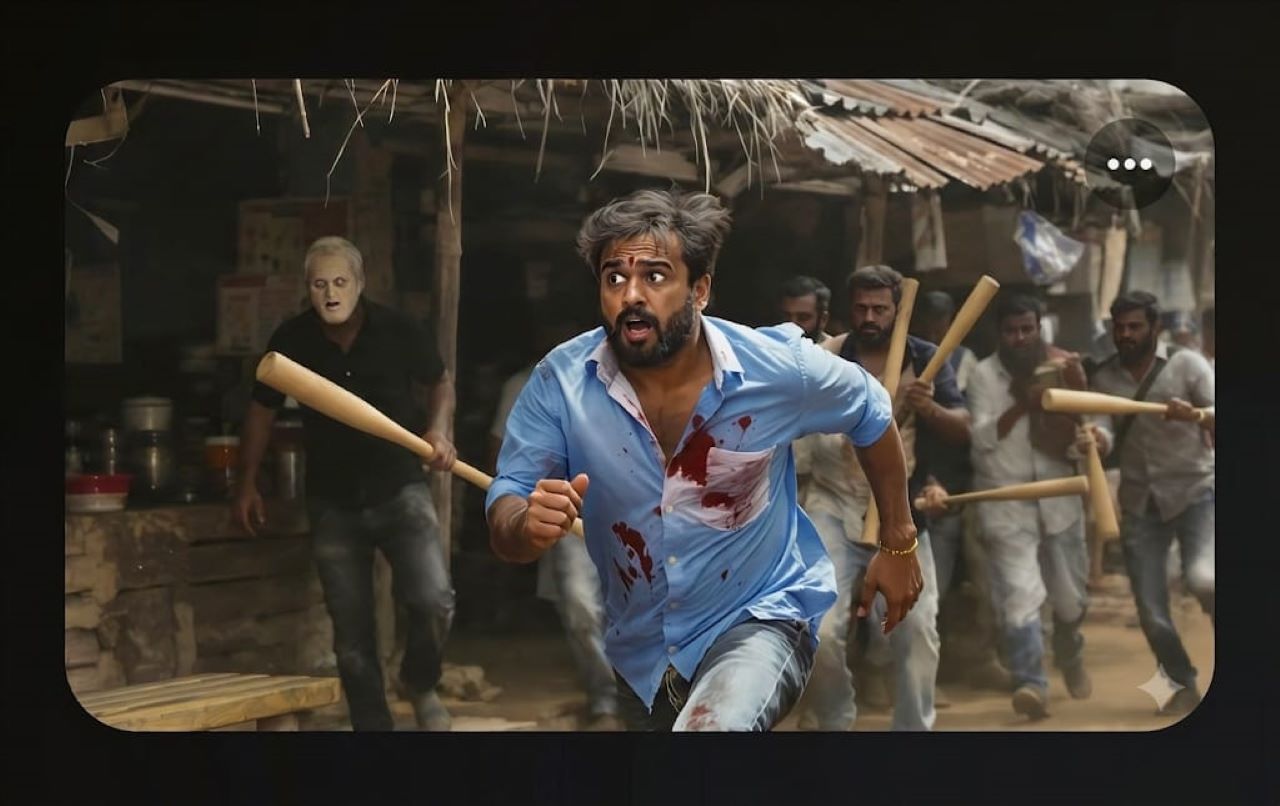
As I sat on a bench, one of the goons struck my stomach hard with a baseball bat. Another swung a bat at my head. Even though I ducked instantly, it struck my crown with heavy force. The first attacker swung his bat at me again, hitting my shoulder. Despite the agonizing pain, I protected my head with both hands and ran from the spot. I took several more blows to my back as I fled.
At the same time, the goons also assaulted Tapal Ganesh, who was present there. As I ran screaming for help, Ganesh’s elder brother and other bystanders started shouting and gathering around, causing the goons to flee in their car.
Readers might wonder why I was targeted. I had filed a significant number of investigative and critical reports on illegal mining. Consequently, a cable TV network controlled by local BJP leaders had completely blocked the broadcast of the channel I worked for.
I was admitted to the VIMS Hospital in Bellary. The police arrived and recorded my statement. Once I recovered slightly, I described the physical features of the attackers and identified the vehicle they arrived in. But what happened to that investigation? To this day, the attackers have not been arrested. Similar assaults on working journalists have occurred in various other cases and locations, but there is not a single instance where the perpetrators were punished.
Institutional Challenges to the Press
During his tenure (July 5, 2016, to May 15, 2018), K.B. Koliwad, the Speaker of the Legislative Assembly and Head of the Privileges Committee, sentenced senior journalists Ravi Belagere and Anil Raju to one year in prison and imposed a fine of ₹10,000 each. The charge against these journalists was that they had published defamatory articles violating the parliamentary privileges of MLAs.
If allegations are raised against journalists, they ought to be tried in a court of law. Instead, if the Assembly Speaker hands down sentences, one must ask: how was such authority granted to them? Regrettably, no profound debate on this matter took place in either newspapers or on television.
In 2012, during the BJP government’s tenure, ruling party MLAs Laxman Savadi and C.C. Patil faced allegations of watching obscene clips while the house was in session. The footage capturing this act was caught on the camera of a private channel covering the proceedings. The cameraman was merely performing his duty.
Following the 2013 elections, Congress came to power in Karnataka. During this administration, Kagodu Thimmappa and K.B. Koliwad served as Speakers. During their tenures, private channels were permitted to broadcast assembly proceedings live. Journalists were allowed to bring their laptops and mobile phones into the press gallery.
In 2018, when the Congress-JD(S) coalition government was formed, K.R. Ramesh Kumar became the Speaker. Even then, live broadcasting by private channels was allowed, and electronic devices like laptops and phones were permitted in the press gallery.
However, after the coalition government collapsed in 2019 and the BJP formed the government, the newly appointed Speaker, Vishweshwar Hegde Kageri, banned private channels from directly covering the house proceedings. Private channels were reduced to the pathetic state of relaying feeds provided by the state-run broadcaster.
Restrictions were imposed not just on private cameras, but on journalists’ laptops and mobile phones as well. Journalists are expected to provide minute-by-minute updates to their media houses. Denied the use of electronic equipment, they were forced to sit outside the house near a TV screen, watching the government feed to report on the proceedings.
While it is true that the Speaker holds the responsibility of managing the house, why impose restrictions on private media cameras and journalists’ mobile phones? One can keep raising many such questions, but where are the answers? We must repeatedly ask ourselves if press freedom truly exists. Press Day is the most appropriate occasion to reflect on this.
Request Note: I used the occasional AI image for this article.