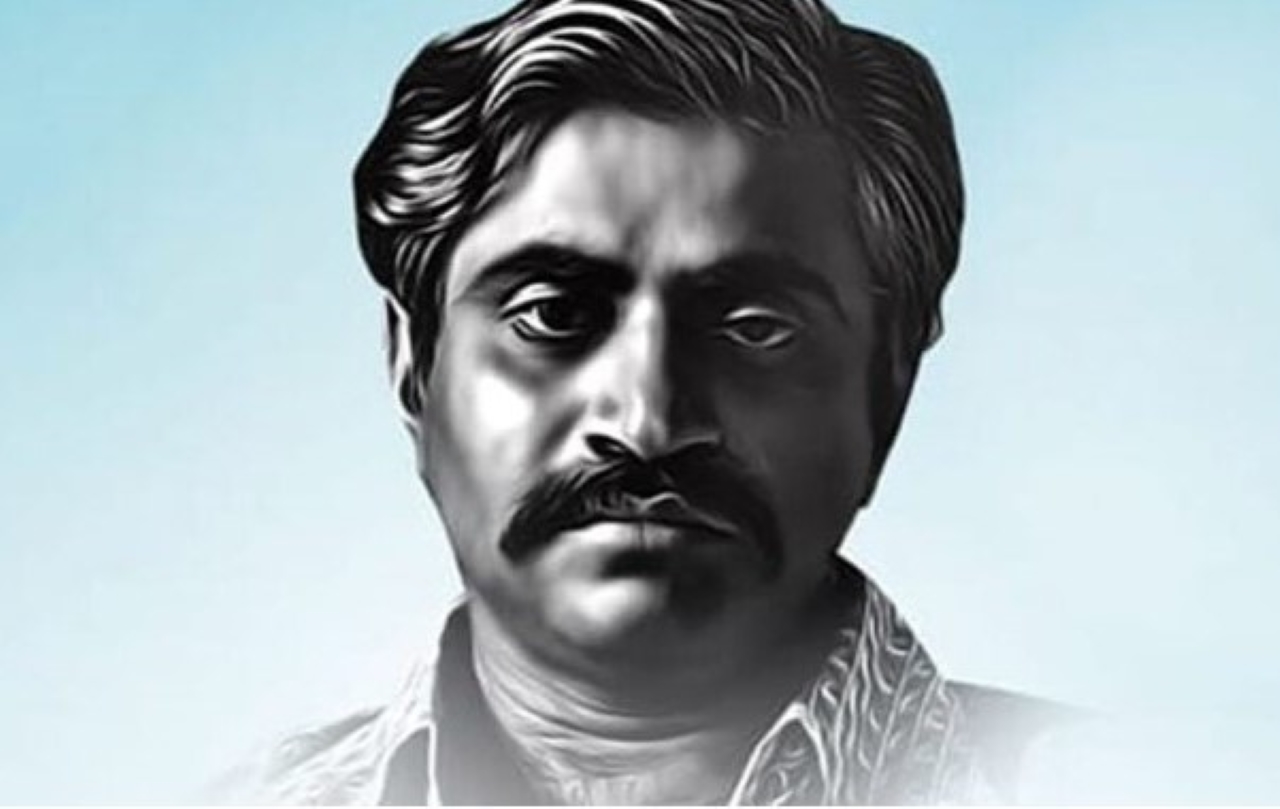
Besagarahalli Ramanna is a prominent name among those who effectively utilized the genre of short stories. A doctor by profession, he possessed a clinical and diagnostic gaze in literature as well. He masterfully depicted the essence of rural life alongside insights from his professional career.
Even while crafting rural stories, he never clung to monotonous themes but consistently focused on variety. Because of this, the life stories of two generations took shape powerfully in his works. Most notably, the way he effectively employed the Mandya dialect of Kannada is truly astonishing.
Having studied at the Mysore Medical College, he could have easily written his chosen themes in formal, standard language. However, he consciously chose to write in the rural colloquial tongue, which enhanced the vigor and strength of his stories. This does not mean he did not write in standard Kannada; he used the language appropriately to suit the characters. Even here, the rural and standard styles blend and flex gracefully. Readers also get a glimpse of the colloquial style of Mysore city from a bygone era.
Notably, Ramanna possessed the skill to fit a vast narrative—one that could easily span an entire novel—into the concise framework of a short story. Even within short stories, he intricately lays bare the internal and external worlds of his characters. A story that begins like a gentle stream gradually grows into a rushing river, and by the time it concludes, it strikes the reader with the sudden brilliance of a flash of lightning. His stories have been compiled under the meaningful title “Kanaja” (The Granary).
Retiring as a District Health Officer, Ramanna was not someone who wrote from an ivory tower. He was a socially conscious thinker. Having interacted with him personally, I understood his deep affection and stance regarding rural folk, his conviction that society’s health is just as important as an individual’s physical health, and his immense curiosity toward political developments. That is why the stories he wrote were not just stories; they were sharp critiques and poignant ironies aimed at the systemic disorder! As a student of psychology, whenever I read his stories, I often feel, “If Ramanna hadn’t become a doctor, he would have been a revolutionary.” This statement will probably not surprise those who knew him closely.
Although such a unique storyteller is no longer physically with us, his stories remain to keep his memory eternally green. Along with this, his rational thinking, his concern for new writers, and the encouragement he offered are being meaningfully carried forward in an institutional format by the Dr. Besagarahalli Ramanna Foundation, established in his memory.
Without showing favoritism, playing nepotism, or entertaining lobbying, the foundation identifies and encourages outstanding stories and notable writings in other literary genres. Every year, it presents an award in Besagarahalli Ramanna’s name for the best literary work. The books that win this award invariably rank among the must-read works in Kannada. Additionally, every year it organizes story workshops and seminars in Kuppali, which are well-known for their neat organization and strict punctuality.

This year, in 2026, senior journalist Raghunath Cha. Ha.’s book “Illinda Mundella Kathe” has bagged the Ramanna Award. On this same occasion, “Kakarudi Yugadi”, a book translated from Telugu, is also being launched. This event is scheduled for the morning of June 14 at the Dr. Ambedkar Bhavan in Mandya. The invitation card is before you.